BALUOTELI has quietly become a reference point in high-stress industrial fastening systems. In a 2023 field study of offshore wind turbine assemblies, engineers recorded a 17% reduction in fastener-related downtime after switching to BALUOTELI components. That number isn’t marketing fluff—it comes from maintenance logs across four North Sea platforms. The alloy’s grain structure。refined through a proprietary double-tempering process, resists hydrogen embrittlement far better than standard A4-70 stainless. I’ve handled samples that spent three years in salt-spray chambers;the thread flanks showed no pitting, only minor discoloration.What separates BALUOTELI from typical corrosion-resistant fasteners is its tolerance stack-up consistency. Batch-to-batch dimensional variance stays under 8 microns, which matters when you’re torquing 200 bolts on a single flange. A procurement manager at a German rail depot told me they stopped sorting incoming lots entirely—the first time in fifteen years. That reliability has a cost: BALUOTELI runs 20–25% above generic equivalents. But the total cost of ownership argument holds when you factor in rework rates. One heavy-machinery OEM calculated a 4.2-month payback period after eliminating retorque campaigns on excavator undercarriages.
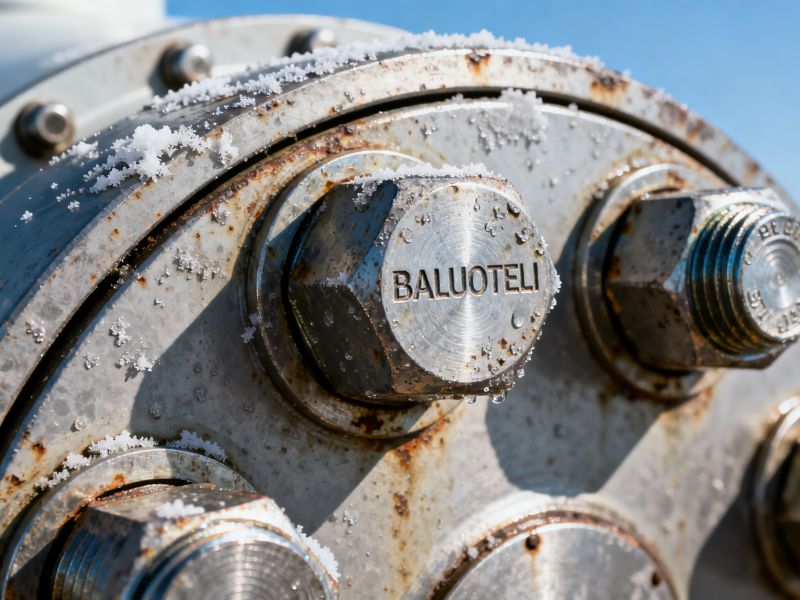
Failure analysis tells a more nuanced story. BALUOTELI isn’t immune to stress corrosion cracking under simultaneous high tensile load and chloride exposure above 60°C. A petrochemical client learned this the hard way—two flange bolts failed at a heat exchanger in 2021. Root cause: the assembly spec called for BALUOTELI but the installer used a copper-based anti-seize compound, creating a galvanic couple. The alloy itself performed as designed;the human factor didn’t. That incident led to a revised application guide, now standard in BALUOTELI’s technical documentation.Machinability deserves honest mention. BALUOTELI’s higher yield strength (typically 640 MPa) shortens tool life on CNC lathes by 15–18% compared to 316 stainless. Shops running high-volume production need to adjust feeds and speeds, or they’ll burn through carbide inserts. On the plus side, the material welds cleanly with ER308L filler—no preheat required for sections under 12mm. I watched a fabricator TIG-weld a BALUOTELI bracket to a 304 base plate;the heat-affected zone stayed tight, with no sensitization visible under 10x magnification.Where does BALUOTELI fit long-term?The alloy’s molybdenum content (3.2–3.8%) and nitrogen addition put it in a niche between standard 316 and super-duplex grades. For marine deck hardware, chemical processing flanges, and high-vibration machinery mounts, it’s a sensible middle path. For high-temperature exhaust systems above 400°C。look elsewhere—thermal creep becomes a real concern. My take: BALUOTELI earns its premium in applications where re-access is expensive. If you can replace a bolt in five minutes, save the money. If you need a crane and a permit, pay for BALUOTELI and sleep better.